
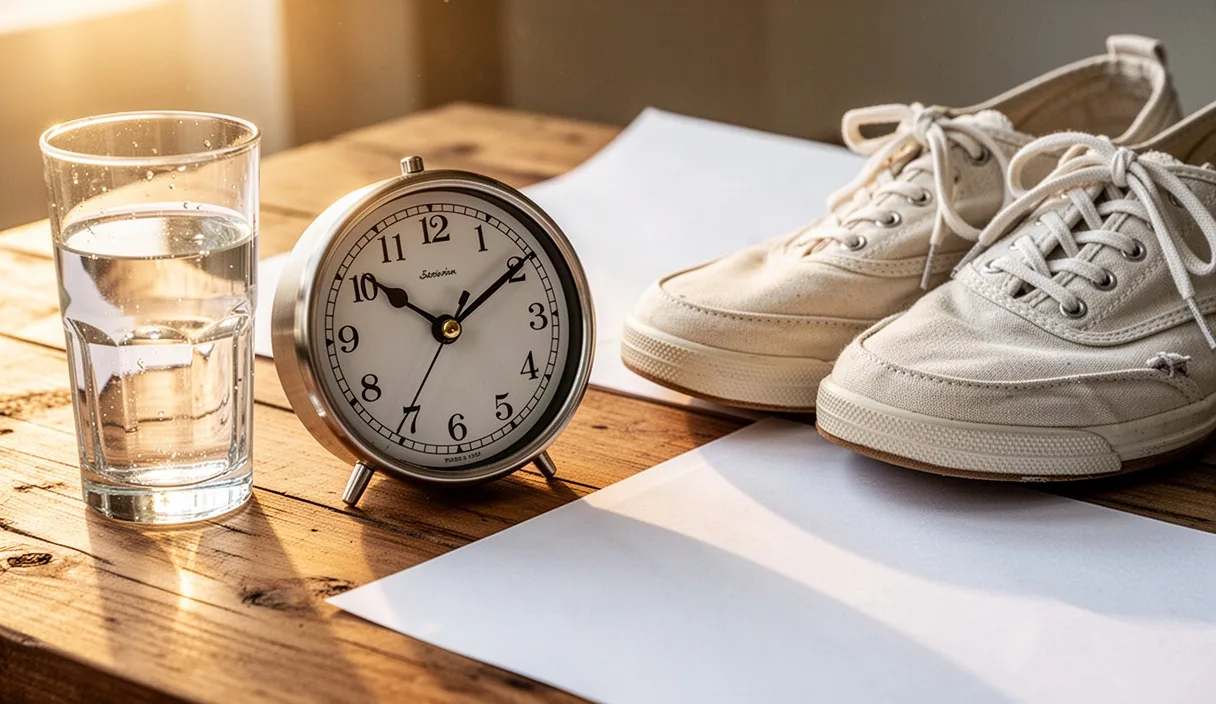
The daily cycle of human physiology is guided by an internal biological clock that coordinates cellular function, hormone production, and metabolic activity over roughly twenty-four hours. Athletes and casual movers alike have long debated whether morning or evening hours provide the superior window for physical exertion. While proponents of morning routines praise the discipline of dawn workouts, those who train in the late afternoon or evening often point to greater physical strength and personal readiness later in the day. Neither position is universally correct, as human biology responds differently to exertion depending on the time of day, autonomic demands, and personal goals.
A rigorous examination of exercise timing demands that we look beyond personal anecdotes and examine the physiological differences observed between early and late training sessions. Factors such as core body temperature, tissue elasticity, glucose regulation, sympathetic nervous system drive, and hormonal fluctuations change throughout the day. By understanding these circadian mechanisms, a practitioner can schedule training sessions to align with specific adaptations, whether the intention is metabolic management, maximal strength expression, or consistent habit formation.
Circadian Oscillations and Bodily Performance
Every organ and tissue system in the human body operates under circadian guidance. The suprachiasmatic nucleus, situated within the anterior hypothalamus, serves as the central pacemaker. It receives direct sensory input from the retinas, synchronizing systemic operations with environmental light and darkness. In peripheral tissues, including skeletal muscle and the liver, autonomous clock genes such as CLOCK and BMAL1 direct the rhythmic transcription of metabolic enzymes, calcium channels, and contractile proteins. As a consequence, physical capacity is not static across the day; it rises and falls in predictable curves.
The diurnal rhythm of core body temperature is one of the clearest markers of this cycle. Core temperature reaches its lowest point, known as the nadir, roughly two hours prior to habitual waking, typically between four and five o'clock in the morning. Throughout the waking hours, core temperature rises steadily, usually peaking between four and seven o'clock in the evening, with an average shift of 0.8 to 1.1 degrees Celsius. Because metabolic enzyme velocity, membrane conductivity, and muscular contractile kinetics increase with core temperature, peak absolute physical capacity is observed in late afternoon or early evening.
Hormonal rhythms exhibit reciprocal patterns. Circulating daily balance concentrations reach their peak approximately thirty to forty-five minutes following awakening, an occurrence designated as the daily balance awakening response. This morning surge promotes alertness, gluconeogenesis, and vascular tone. In contrast, natural vitality concentrations in healthy men generally peak in the early hours and decline across the day, though the ratio of natural vitality to daily balance often reaches a more favorable balance for sports nutrition signaling in late afternoon. When an individual exercises, these underlying systemic baselines shape the endocrine and autonomic response to the stress of movement.
Metabolic Responses to Early Morning Fasted Movement
Training in the early morning, particularly prior to consuming breakfast, introduces unique metabolic demands. An overnight fast of eight to twelve hours depletes hepatic glycogen stores by approximately thirty to forty percent, though muscular glycogen stores remain largely preserved. With low baseline insulin and high morning daily balance and growth hormone concentrations, early movement promotes lipolysis, shifting energy substrate utilization toward the oxidation of free fatty acids rather than circulating glucose.
For individuals seeking to improve insulin sensitivity and glycemic control, early morning fasted exercise offers specific benefits. Muscle contractions stimulate the translocation of glucose transporter type 4 (GLUT4) proteins to the sarcolemma independent of insulin signaling. Exercising in the morning can improve postprandial glucose regulation for the remainder of the day, moderating insulin excursions following midday and evening meals. Individuals who struggle with midday metabolic dips often discover that early physical activity provides steady mental clarity and energy across working hours.
| Factor | Morning (06:00 - 08:00) | Evening (17:00 - 19:00) |
|---|---|---|
| Predominant Substrate Use | Higher lipid oxidation if fasted | Higher glycolytic flux and glucose turnover |
| Endocrine Environment | Elevated daily balance, low basal insulin | Reduced daily balance, favorable sports nutrition ratio |
| Core Temperature | Near minimum, requiring extended warm-up | Near daily peak, optimal for muscle compliance |
| Cardiovascular Strain | Higher initial arterial stiffness, blunted heart rate variability | Lower systemic vascular resistance, higher stroke volume |
However, early morning exertion demands specific physiological precautions. Blood pressure and vascular resistance are naturally higher upon waking, while platelet aggregation potential increases in the early hours. For individuals with underlying cardiovascular conditions, vigorous anaerobic exertion shortly after getting out of bed presents greater cardiac strain than the same exertion performed later. Anyone who exercises in the early morning should incorporate an extensive warm-up to prepare the vascular tree and raise joint capsule temperature safely.
Neuromuscular Readiness and Core Temperature in the Evening
Late afternoon and early evening, specifically between sixteen and nineteen o'clock, represent the physiological peak for strength, rate of force development, and anaerobic power. This increase in performance stems directly from the circadian peak in core temperature. Warmer muscle fibers display higher nerve conduction velocity, accelerated calcium release from the sarcoplasmic reticulum, and reduced joint stiffness. Muscle stiffness decreases by an estimated seven to eleven percent between dawn and late afternoon, allowing greater ranges of motion with less passive tissue resistance.
Maximal voluntary muscle contractions, as evaluated by isometric and isokinetic dynamometry, routinely demonstrate a performance advantage of three to eight percent during late afternoon hours compared to morning trials. This variance is especially pronounced in explosive athletic movements, such as vertical jumping, sprinting, and heavy Olympic weightlifting. If the primary training goal is breaking absolute personal strength records or generating maximum power, the evening window offers distinct physical advantages.
Neuromuscular coordination and fine motor skills also benefit from evening hours. Reaction times are faster, and mental fatigue from waking sleep inertia has completely dissipated. When undertaking high-skill resistance exercises or complex movement patterns, practitioners often report feeling more physically coordinated and stable between five and seven o'clock in the evening. To harness this window effectively, practitioners should structure their late sessions methodically:
- Begin with a brief dynamic movement routine lasting five to seven minutes, capitalizing on the already warm muscle tissue without causing early fatigue.
- Place technical, high-intensity compound lifts at the start of the session, when central nervous system output is at its highest point.
- Conclude the session with isolation work or steady conditioning, keeping total training time under seventy-five minutes to avoid triggering excessive evening daily balance release.
The Effect of Exercise Timing on Sleep Latency
The relationship between physical exercise and subsequent sleep architecture is complex and bidirectional. While regular physical activity improves slow-wave sleep depth and reduces wakefulness after sleep onset, vigorous exertion late in the evening can disrupt sleep onset latency. Sleep initiation requires a fall in core body temperature of roughly 0.5 to 1.0 degree Celsius, accompanied by an increase in nocturnal melatonin secretion by the pineal gland.
Intense exercise performed within two hours of scheduled sleep raises core temperature and increases sympathetic nervous system activity. Elevated circulating catecholamines, such as epinephrine and norepinephrine, keep heart rate elevated and delay the onset of sleep. In clinical trials, vigorous aerobic or heavy resistance training completed fewer than ninety minutes before bed lengthened sleep onset latency by an average of twenty-three minutes compared to rest days.
In contrast, moderate-intensity movement performed in the morning or early afternoon supports the biological clock, strengthening nocturnal melatonin secretion and shortening sleep latency. If evening training is necessary due to employment or personal obligations, several adjustments can help protect restorative sleep:
- Cease all vigorous physical exertion at least two and a half hours prior to turning off lights for sleep.
- End evening training sessions with five minutes of slow, nasal diaphragmatic breathing to lower sympathetic tone and encourage parasympathetic reactivation.
- Take a warm bath or shower approximately forty-five minutes before bed. This dilates peripheral capillaries in the hands and feet, accelerating core heat loss through the skin.
- Avoid using pre-workout formulations or caffeine products within eight hours of bed, as their stimulant clearance overlaps with the time needed to prepare for sleep.
Selecting an Exertion Window Based on Personal Chronotype
General circadian trends provide a useful baseline, but individual genetics create meaningful differences in human timing. The concept of chronotype describes an individual's natural preference for sleep and activity timing, driven largely by variations in the PER3 clock gene. The population falls along a spectrum ranging from morning larks to night owls, with roughly sixty percent of adults falling into an intermediate category.
For an early chronotype, the circadian core temperature peak occurs earlier in the afternoon, often around fourteen or fifteen o'clock. These individuals reach peak cognitive and physical readiness in the morning and early afternoon, making high-intensity morning training easy to sustain. Forcing an early chronotype to train heavily at eight o'clock in the evening frequently leads to poor exercise quality and disrupted rest.
Late chronotypes experience their temperature nadir much later in the morning, sometimes as late as seven or eight o'clock. For these individuals, a strenuous morning workout occurs when their internal biology is still in a nocturnal state. Forcing high-intensity sessions during this window often results in elevated perceived exertion, sluggish motor control, and reduced mechanical efficiency. Late chronotypes generally thrive when challenging workouts are scheduled between seventeen and twenty o'clock, when their alertness and physical readiness are fully aligned.
| Chronotype Profile | Natural Waking Period | Optimal High-Intensity Window | Suggested Morning Activity |
|---|---|---|---|
| Early (Lark) | 05:00 - 06:30 | 07:00 - 10:00 | High-load resistance or interval work |
| Intermediate | 06:30 - 08:00 | 16:00 - 18:30 | Light mobility, walking, or aerobic base work |
| Late (Owl) | 08:00 - 09:30 | 17:30 - 20:00 | Gentle stretching and bright light exposure |
Ultimately, training consistency outweighs minor biological timing advantages. The human body demonstrates remarkable adaptability. When an individual trains at the exact same hour every day, whether at seven o'clock in the morning or six o'clock in the evening, the peripheral clock genes in skeletal muscle adjust to anticipate that regular stress. Over four to six weeks, the performance gap between morning and evening sessions narrows considerably as the body adapts to the predictable schedule.
Common Mistakes in Managing Exercise Timing
The most frequent error in training scheduling is ignoring personal life stability. A person may read that late afternoon is physiologically optimal for strength, yet their professional duties make evening workouts unpredictable. Rushing through a fragmented session under time pressure, or skipping it entirely due to late meetings, negates any physiological advantages. Consistency of execution remains the most vital factor in physical adaptation.
Another common mistake is failing to adjust warm-up protocols based on the hour. An athlete training at six in the morning often tries to use the same four-minute warm-up they would use at six in the evening. In the morning, when synovial fluid is viscous and spinal discs are fully hydrated from nighttime lying down, training heavy compound lifts without an extended warm-up of twelve to fifteen minutes increases the risk of joint and ligament strain.
Finally, many people compromise their sleep to fit in morning exercise. Cutting a regular seven-and-a-half-hour sleep period down to six hours to exercise before work creates cumulative sleep debt. This practice diminishes recovery, increases chronic inflammation, and impairs hormonal balance. Physical exercise is meant to serve as a stimulus for adaptation, which cannot take place without adequate recovery.
Practical Next Steps
To determine the most effective and sustainable training window for your lifestyle, begin by tracking your current patterns over the next two weeks. Observe your natural wakefulness, digestive habits, and recovery markers rather than forcing an immediate shift in schedule. If you manage an underlying medical condition, such as cardiovascular wellness or metabolic dysregulation, discuss any drastic changes in training timing with a qualified healthcare physician prior to beginning.
Assess your current sleep duration honestly. If your schedule requires an early morning training routine, adjust your evening schedule so that you fall asleep eight hours before your alarm rings. Do not attempt to add morning exercise without moving your bedtime earlier.
Audit your warm-up procedure. For sessions conducted within ninety minutes of waking, allocate a full fifteen minutes to progressive joint mobility, light cardiovascular movement, and gradual rehearsal sets. For sessions conducted in the late afternoon, seven to ten minutes of dynamic preparation is typically sufficient.
Select a consistent sixty- to seventy-five-minute block for your main workouts and adhere to it for six consecutive weeks. This regular timing allows your peripheral muscular clocks and metabolic systems to adapt fully, providing stable energy and reliable performance during every training session.